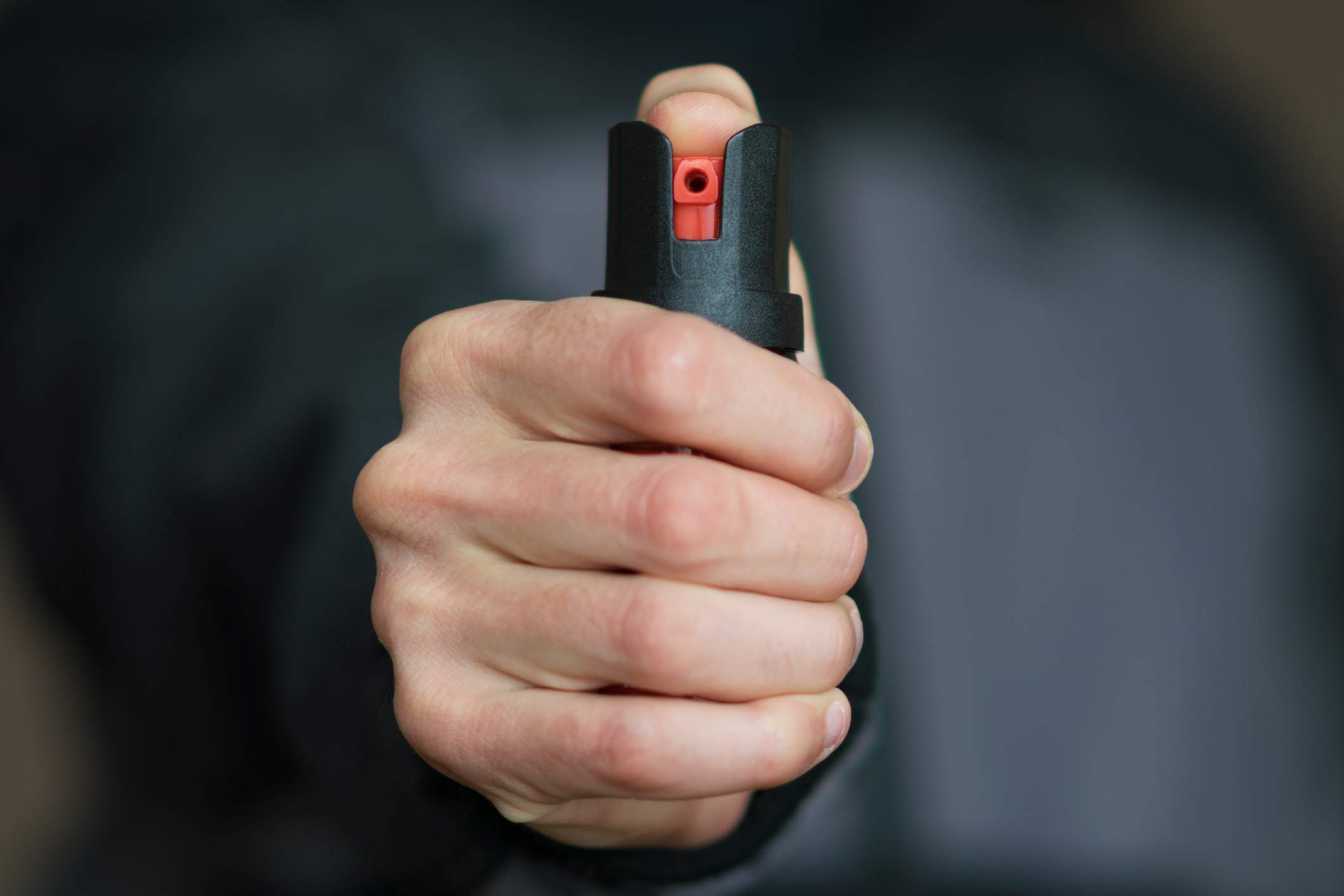
Sarah grips the small, aluminum canister in her jacket pocket until her knuckles turn a porcelain white. It is eleven o'clock on a Tuesday. The streetlights in her neighborhood have a rhythmic, flickering blink that makes the shadows of the oak trees dance across the sidewalk. Usually, this walk from the bus stop feels like a gauntlet. Tonight, she feels a strange, cold buzzing of confidence. She has "protection."
In many parts of the world, that four-ounce cylinder of oleoresin capsicum—pepper spray—is illegal, classified as a prohibited weapon alongside flick-knives and brass knuckles. But as public anxiety climbs and headlines grow darker, a loud, instinctive cry for legalization grows with them. It seems like a simple math problem: woman plus spray equals safety. Also making waves in this space: The Kinetic Deficit Dynamics of Pakistan Afghanistan Cross Border Conflict.
The math is wrong.
Safety is not an object you can buy for twenty dollars at a sporting goods store. When experts warn that legalizing these canisters creates a "false sense of security," they aren't being patronizing or dismissive of Sarah’s fear. They are looking at the messy, violent physics of a street encounter. They are looking at what happens when the wind blows the wrong way, when adrenaline turns fingers into frozen sausages, and when a tool of defense becomes a target for an aggressor. Further information into this topic are detailed by Al Jazeera.
The Chemistry of a Mistake
Pepper spray works by causing an immediate inflammatory response. It slams the capillaries in the eyes shut, triggers a cough that feels like swallowing liquid fire, and sends the mucus membranes into overdrive. On paper, it is the ultimate equalizer. In reality, it is a fickle god.
Imagine Sarah is approached. The man is close—too close. She reaches for the canister. Here is where the "false sense" begins to crumble. Under extreme stress, the human brain undergoes a process called cortical inhibition. The prefrontal cortex, the part of the brain that handles complex tasks like "finding the safety catch" or "aiming for the eyes," essentially goes offline. The body relies on gross motor skills.
If Sarah has never practiced drawing that spray under pressure, she will fumble. She might spray her own thumb. She might hold it upside down. Even if she gets it right, pepper spray does not work like a phaser from a science fiction movie. It doesn't "stun" someone instantly. There is a lag. A motivated, intoxicated, or simply enraged individual can cover fifteen feet of ground in the seconds it takes for their eyes to start swelling. By the time the spray takes full effect, the canister is often already in the attacker's hands.
The Wind and the Room
Then there is the environment. Most people envision using defense sprays on a wide-open, windless plain. But violence is cramped. It happens in elevators, in narrow hallways, or against the side of a parked car.
Consider a hypothetical scenario where an altercation occurs in a subway car. Sarah fires. The mist doesn't just travel in a straight line; it atomizes. It fills the cabin. Now, not only is the aggressor blinded, but Sarah is choking, too. The bystanders are coughing. The exit is obscured by a cloud of orange pain. This is the "blowback" effect. In many documented cases, the person deploying the spray ends up more incapacitated than their target because they weren't expecting the recoil of the air itself.
In the UK and other jurisdictions where these items are banned, the logic isn't just about preventing crime; it’s about preventing escalation. There is a psychological phenomenon known as the "weapons effect." The mere presence of a weapon—even a defensive one—tends to increase the aggression of everyone involved. An encounter that might have ended with a shouted insult or a hasty retreat suddenly shifts into a high-stakes battle for control of a chemical agent.
The Marketing of Fear
We live in an era where safety is sold as a lifestyle choice. We are told that if we buy the right smart lock, the right doorbell camera, and the right canister of spray, we have built a fortress around our lives. This is a seductive lie. It allows us to ignore the much harder, more expensive work of building safe communities, improving street lighting, and addressing the root causes of urban violence.
When a government legalizes pepper spray, it often does so as a cheap concession. It is a way of saying, "We can't actually make the streets safer, so here is a little can of fire to carry while you're out there. Good luck."
It shifts the burden of safety from the state to the individual. If Sarah gets hurt despite having her spray, the subtle, unspoken suggestion is that she didn't use it correctly, or she didn't buy a strong enough brand. The focus moves away from the attacker’s choice to commit a crime and toward the victim's failure to defend themselves.
The Muscle Memory of Survival
If we take the spray out of Sarah's hand, what are we left with? We are left with the uncomfortable truth that real safety requires more than a purchase.
True self-protection is a set of skills, not a collection of gadgets. It is situational awareness—the ability to see a threat before it closes the distance. It is de-escalation—the verbal mastery required to turn a boiling situation down to a simmer. It is physical conditioning—the ability to run, to strike, and to move.
These things are hard. They take time. They don't fit in a jacket pocket.
There is a specific kind of tragedy in the story of someone who felt "safe" because of an object. They walked down the darker alley. They kept their headphones on. They stayed out five minutes longer than their gut told them was wise. They let their guard down because they trusted a plastic nozzle.
Legalization proponents argue that "something is better than nothing." But in the high-velocity world of a physical confrontation, "something" that doesn't work—or works against you—is much worse than nothing. It is a distraction. It is a weight. It is a promise that the manufacturer cannot keep.
Sarah reaches the door of her apartment building. She pulls her hand out of her pocket, the canister still clutched in her palm. She feels a sense of relief as the heavy glass door clicks shut behind her. She looks at the small, silver tool and thinks about how much power she gave it during her walk.
The spray didn't bring her home. Her legs did. Her eyes, darting from shadow to shadow, did. Her decision to keep moving did. The canister was just a heavy, cold piece of metal, a silent witness to a fear that it could never truly extinguish.
We want to believe in magic charms. We want to believe that we can carry a piece of the sun in our pockets to ward off the dark. But when the wind shifts and the distance closes, we find that the only thing we can truly rely on is the clarity of our own minds and the strength of our own resolve. The silver can is just an illusion of armor, and sometimes, wearing an illusion is the most dangerous thing of all.