The air in Gatineau changes when the humidity breaks, but the weight of what moves through its streets remains constant, invisible, and heavy. We often talk about crime in the abstract. We speak of "seizures" and "investigations" as if they are clinical procedures performed on a patient who cannot feel the needle. But a table stacked with thirteen kilograms of white powder and crystalline shards isn't just a statistic. It is a map of a thousand shattered Friday nights. It is the physical manifestation of a shadow economy that breathes right next to us while we wait for the light to turn green on Boulevard Maisonneuve.
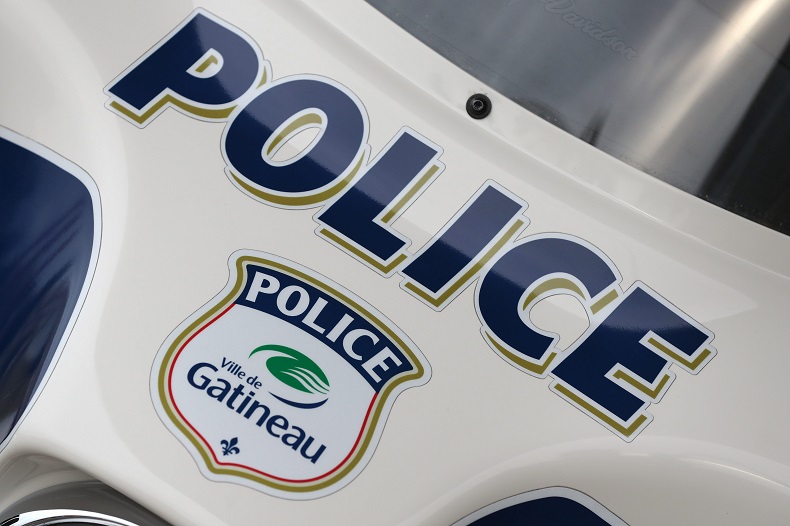
When the Gatineau Police Service concluded their latest probe, the numbers they released were staggering. Eleven kilograms of cocaine. Two kilograms of methamphetamine. A pile of cash totaling $65,000. To the officers donning tactical vests, these are the trophies of a long, grueling surveillance. To the city, they are a brief headline. Yet, to understand the true gravity of this moment, you have to look past the evidence bags. You have to look at the math of human misery.
The Anatomy of a Dose
Consider the cocaine first. Eleven kilograms. That sounds like a heavy suitcase, something you’d struggle to lift into an overhead bin. But break it down. A standard "hit" is a fraction of a gram. That suitcase contains enough potential energy to fuel over one hundred thousand individual moments of chemical euphoria—and the subsequent, devastating crashes that follow.
Imagine a single apartment in a quiet corner of the Hull sector. A young man, let's call him Marc, sits on a faded sofa. He isn't a "kingpin." He isn't a "trafficker" in the way movies depict them. He is just a guy who knows a guy. When that eleven-kilogram shipment is intercepted, Marc’s phone goes silent. That silence ripples. It creates a vacuum. In the world of illicit trade, a vacuum is never empty for long; it is filled by desperation, by debt, and by the sudden, sharp rise in the price of a fix.
The police didn't just take drugs off the street. They interrupted a metabolic process of an entire subculture.
The Shards of the North
Then there is the methamphetamine. Two kilograms of it. If cocaine is the frantic heartbeat of the nightlife, meth is the jagged, sleepless engine of the marginalized. It is cheaper. It is meaner. It lasts longer and takes more when it leaves.
Metaphorically speaking, meth is a mortgage on a house you don't own. You get the keys today, but the interest rates are designed to bankrupt you by Tuesday. When two kilograms of this substance are removed from the ecosystem, the immediate effect is a localized peace. For a few days, perhaps a few weeks, the frantic energy in certain alleyways dims. The "invisible stakes" the public rarely sees are the hospital beds that won't be filled tonight because a specific batch didn't make it to its destination.
But the officers involved in this bust—the ones who spent weeks or months mapping out the connections, watching the handoffs in parking lots, and documenting the flow of $65,000 in crumpled bills—know that this is a game of tides. The tide goes out. The beach looks clean. You know the water is coming back.
The Paper Trail of Greed
The $65,000 in cash is perhaps the most telling part of the haul. It represents the "why." In a world where most of us tap a piece of plastic against a terminal to buy a coffee, this mountain of physical currency is an anomaly. It is "dirty" money, not because of the drugs it bought, but because of the way it exists outside the social contract.
This money doesn't pay for schools. It doesn't fix the potholes on Rue Montcalm. It is a closed loop of tax-free profit that fuels further expansion. When the police seize it, they aren't just taking away a dealer’s buying power; they are reclaiming a piece of the city's stolen economy.
There is a specific kind of tension that exists in a room where that much cash is counted. It smells of copper and old paper. It represents thousands of small betrayals—the rent money that wasn't paid, the child support that disappeared, the savings account emptied in a moment of weakness. Every twenty-dollar bill in that pile has a story of loss attached to it.
The Invisible Shield
We tend to take our safety for granted. We walk our dogs through the park and complain about the transit system, rarely thinking about the men and women who spend their lives staring at the dark spots on the map. This Gatineau trafficking probe wasn't an accident. It wasn't a lucky break. It was the result of "lived experience" in the most professional sense.
Officers learn the rhythm of the city. They know which cars don't belong in which neighborhoods. They learn the language of the handoff. Their expertise isn't just in the law; it’s in human behavior. They see the patterns of addiction and the hierarchies of the street.
The struggle, however, is the uncertainty. For every thirteen kilograms seized, how many more moved through the bridges to Ottawa? The police feel this weight more than anyone. They are the ones who have to admit, if only to themselves, that the war is never truly won. It is only managed.
The Cost of the Connection
What we often miss in the dry reports of "police activity" is the human cost of the investigation itself. It’s the missed dinners at home. It’s the mental toll of seeing the worst version of your neighbors. It’s the adrenaline of the raid, followed by the mountain of paperwork that follows—the painstaking process of ensuring that every gram is accounted for, every right is read, and every piece of evidence is airtight.
The system is slow. It is cumbersome. It is, at times, frustratingly bureaucratic. But it is the only thing standing between a functioning society and a free-for-all.
Consider the "hypothetical" impact on a neighborhood after a bust of this scale. For a moment, the air feels lighter. The parents who were worried about the "activity" at the end of the block breathe a sigh of relief. The store owners who were tired of the loitering see a change in the foot traffic. These are the small, unrecorded victories of law enforcement. They aren't mentioned in the press release, but they are the reason the work is done.
Thirteen kilograms.
It fits in a few boxes. It can be loaded into a police van by one person. But the ripple effect of its removal is felt by thousands. It is a temporary dam in a river that wants to flood.
The story of the Gatineau drug bust isn't about the substances themselves. It is about the friction between two worlds. One world operates in the light, governed by rules, taxes, and the mundane safety of the everyday. The other operates in the cracks, fueled by a chemical need and a desperate desire for profit.
When those worlds collide, as they did in this investigation, the result is a pile of evidence on a table and a brief moment of clarity. We see what we are up against. We see the scale of the shadow. And then, we go back to our lives, hoping the light stays on just a little bit longer.
The weight of thirteen kilograms is now locked in an evidence locker, but the gravity of what it represents still pulls at the edges of the city.
A single red taillight disappears into the Gatineau fog, leaving nothing behind but the quiet, persistent pulse of a town trying to keep its balance.