The U.S. military just sent a loud, explosive message to Tehran. By taking out a specific Iranian base that posed a direct threat to the Strait of Hormuz, Washington is trying to draw a line in the sand—or rather, the water. This isn't just another skirmish in a long line of Middle Eastern tensions. It's a calculated move to prevent a global economic heart attack. If you've been wondering why your gas prices or shipping costs feel like they're tied to a trigger-happy region, this is the reason.
The Strait of Hormuz is a narrow chink in the world's armor. It’s the only way out for massive amounts of oil and liquefied natural gas from the Persian Gulf. When Iran positions hardware there that can "take out" tankers or harass international shipping, the White House usually loses sleep. This time, they decided to act instead of just issuing another strongly worded press release.
What actually happened at the base
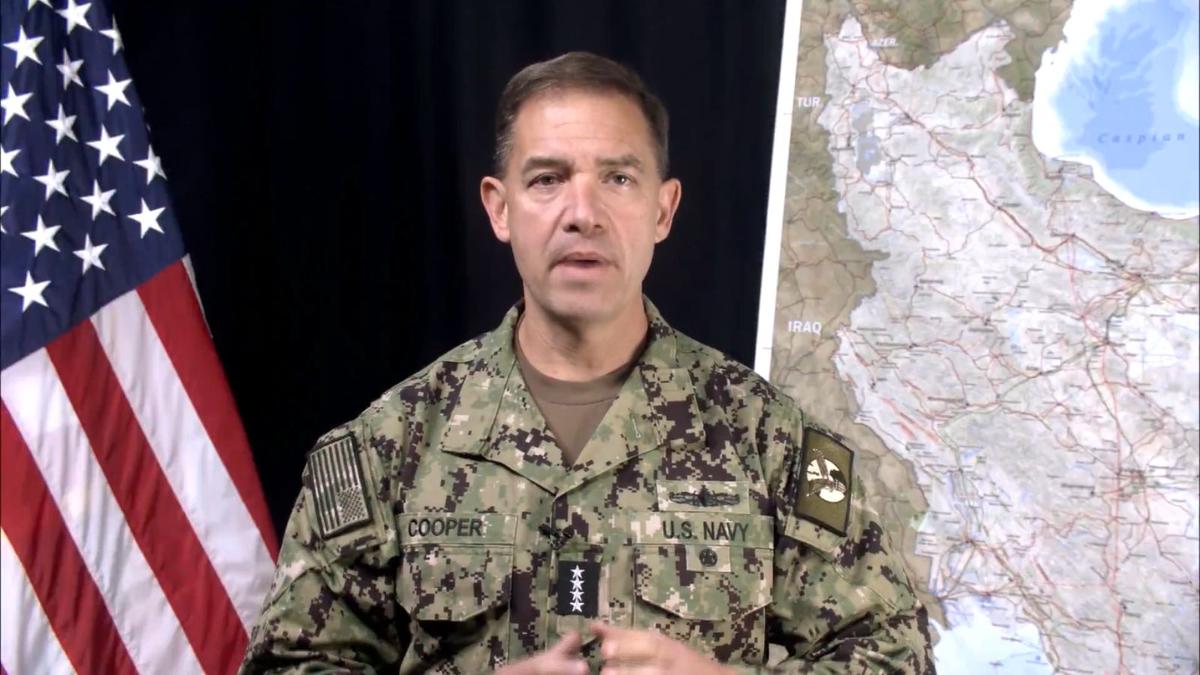
The strike targeted a facility that the Pentagon identified as a primary launch point for drones and fast-attack boats. These aren't the kind of assets used for coastal defense. They’re built for asymmetric warfare—specifically, for swarming larger vessels or conducting "hit and run" operations in the world’s most congested shipping lane.
The U.S. Central Command (CENTCOM) confirmed the operation followed a series of provocations. We aren't just talking about verbal threats. There was intelligence suggesting an imminent plan to block or significantly disrupt the flow of traffic through the Strait. By hitting the base now, the U.S. is practicing "preemptive de-escalation." It sounds like an oxymoron, but in the world of high-stakes geopolitics, it’s a standard play. You break their toys before they can use them to break the global economy.
The precision of the strike is worth noting. It wasn't a carpet-bombing run. It was a surgical hit designed to minimize "collateral damage" while maximizing the disruption of Iranian tactical capabilities. The goal wasn't to start a full-scale war. It was to show that the U.S. still has the reach and the resolve to protect the 20 million barrels of oil that pass through that 21-mile-wide chokepoint every single day.
The obsession with the Strait of Hormuz
Why does one tiny strip of water matter so much? Honestly, it’s simple math. Roughly a third of the world's total seaborne-traded oil moves through the Strait. If that flow stops, the global economy doesn't just slow down; it breaks.
Think about the supply chain. Most people think of "supply chain issues" as something that happened during the pandemic because of factory shutdowns. But a blockage in the Strait of Hormuz is different. It’s an energy shock. When tankers can't get out, refineries in Asia, Europe, and North America start running dry. Prices at the pump skyrocket within 48 hours. Shipping insurance rates for every other vessel in the region go through the roof.
Iran knows this. They’ve used the threat of "closing" the Strait as their primary geopolitical lever for decades. It’s their version of a nuclear deterrent without actually needing the nukes. By maintaining bases directly overlooking the narrowest points, they hold a metaphorical knife to the throat of the global energy market. The U.S. strike was an attempt to knock that knife out of their hand, at least for a little while.
Why this strike is different from previous ones
In the past, the U.S. often responded to Iranian provocations with sanctions or by moving a carrier strike group into the area as a show of force. This time, the kinetic response—actually dropping bombs—suggests a shift in policy.
The current administration seems to have realized that "strategic patience" was being interpreted by Tehran as "strategic weakness." Recent years saw an increase in sea-mine attachments, drone strikes on tankers, and the illegal seizure of foreign-flagged ships. Each time the U.S. didn't swing back, the Iranians pushed a little further.
By taking out the base, the U.S. is resetting the "rules of engagement." It’s a way of saying that the era of ignoring small-scale harassment is over. The risks are obviously high. There's always the chance of a cycle of retaliation that spirals out of control. But the risk of doing nothing—allowing Iran to effectively gain veto power over global trade—was finally deemed higher.
The ripple effect on global energy markets
Markets hate uncertainty. Usually, when news of a strike like this hits the wires, oil futures jump. You’ll see Brent Crude and WTI (West Texas Intermediate) tick up by a few dollars almost instantly. But there’s a deeper layer to this.
Traders aren't just worried about the immediate destruction. They’re worried about what comes next. Does Iran retaliate by hitting a Saudi processing plant? Do they use their proxy networks in Yemen or Iraq to widen the conflict?
The irony is that the U.S. is now a net exporter of oil, but we still aren't immune. Oil is a global commodity. If the price goes up in Singapore because of a mess in the Strait of Hormuz, the price goes up in Houston and London, too. It’s all connected. This strike was as much about protecting the American consumer's wallet as it was about national security.
The technical reality of closing the Strait
Could Iran actually "close" the Strait of Hormuz? Military experts have debated this for years. On paper, they have the mines, the missiles, and the sub-surface capabilities to make the passage suicide for a commercial tanker.
But actually holding it closed is a different story. The U.S. Navy’s Fifth Fleet is stationed right across the way in Bahrain. They have mine-sweeping capabilities and the air power to clear the heights overlooking the water. Iran can cause a massive, bloody headache for a week or two, but they can't realistically shut the door and lock it against the combined might of the U.S. and its allies.
The strike on the base targeted the very assets that would make a "closure" attempt possible. By removing the launch sites for anti-ship missiles and the staging areas for fast boats, the U.S. is effectively making the "close the Strait" threat less credible. It’s about eroding Iran’s leverage.
What happens when diplomacy fails
We’ve seen years of back-and-forth negotiations regarding the nuclear deal and various regional security frameworks. This strike is a glaring admission that, for now, diplomacy is in the backseat. When you start blowing up bases, the talking has mostly stopped.
It’s a gritty reality. You can't negotiate with a drone that’s already in the air. The U.S. intelligence community likely saw something specific that forced their hand. We may never know the exact "smoking gun" piece of data, but the timing suggests they were trying to head off a major incident before it happened.
The move also serves as a signal to other regional players. Saudi Arabia, the UAE, and Israel are all watching. They want to know if the U.S. is still willing to play the role of regional stabilizer or if they’re looking for the exit. A strike of this nature says, "We’re still here, and we’re still willing to use force to protect our interests."
The role of drone technology in modern naval conflict
One of the biggest reasons this base was such a problem is the evolution of drone warfare. Ten years ago, Iran needed a fleet of expensive jets or a large navy to threaten the Strait. Now, they can do it with a few dozen "suicide" drones that cost less than a luxury car.
These drones are hard to track and even harder to intercept when they move in swarms. They can be launched from the back of a truck or a small fishing boat. By hitting the base where these units were housed and commanded, the U.S. is trying to decapitate the technical infrastructure of this low-cost, high-impact threat. It’s a cat-and-mouse game where the mouse suddenly got a lot more dangerous, so the cat had to bring a bigger hammer.
Misconceptions about the U.S. presence
A lot of people think the U.S. is only there for "our" oil. That’s a dated view. Most of the oil going through the Strait actually goes to China, India, Japan, and South Korea.
So why is the U.S. doing the heavy lifting? Because we are the only ones with the blue-water navy capable of doing it. It’s the "global policeman" role that everyone complains about until a tanker gets hit and the global economy starts to crater. If the U.S. pulled back and let the Strait become a free-for-all, the chaos wouldn't just stay in the Middle East. It would land on everyone's doorstep.
Navigating the fallout
What should you watch for in the coming days? First, look at the "tanker track." If you see major shipping companies starting to divert vessels or pause transits through the Strait, you know the situation is getting worse. Second, watch for the Iranian response. They almost always respond, but it’s rarely a direct "eye for an eye" move. It might be a cyberattack, a strike in a different country, or a move in the Red Sea via the Houthis.
The U.S. has made its move. The ball is in Tehran’s court. They can take the hit and dial it back, or they can double down. History suggests they’ll find a way to strike back that stays just below the threshold of an all-out war. It’s a dangerous game of chicken played with millions of barrels of oil and thousands of lives.
Stay informed by monitoring real-time shipping data and energy market fluctuations. The Strait of Hormuz isn't just a geographical location; it’s a pulse point for the world. When it thumps, everyone feels it. Don't expect this to be the last time you hear about a strike in this area. As long as the world runs on oil and that oil has to pass through a 21-mile gap controlled by a hostile power, the explosions will continue.
Watch the price of Brent Crude as a primary indicator of regional stability. If it stays relatively flat, the market believes the "message" was received and the situation is contained. If it starts to climb steadily, buckle up. The geopolitical temperature just hit boiling point.