The neon sign above the "Blue Moon" storefront flickered twice before dying, leaving the narrow alley in Sweida swallowed by an uneasy, charcoal-colored dusk. Inside, the shelves were already half-empty. It wasn't because business was booming. It was because the bottles had become symbols of a war that was supposed to be over, yet was now reinventing itself in the form of moral codes and municipal decrees.
Fadi wiped the counter with a rag that had seen better days. He didn't look like a revolutionary. He looked like a man who just wanted to sell a bottle of Lebanese arak without being treated like a criminal. But in southern Syria, the act of pouring a drink has shifted from a social ritual to a frontline in a battle for the soul of the Druze heartland. For a deeper dive into similar topics, we suggest: this related article.
When the local authorities recently moved to shutter liquor stores and restrict sales, they didn't just target a beverage. They pulled a thread that holds together the fragile fabric of personal liberty in a region already bruised by a decade of physical conflict.
The Quiet Creep of the Moral Guard
For years, the sound of Sweida was the hum of generators and the distant thud of artillery. Now, the silence is heavier. It is the silence of a community watching its borders—not the physical ones, but the invisible lines of what a person is "allowed" to do in the privacy of their own life. For broader information on the matter, detailed coverage is available at USA Today.
The restrictions arrived under the guise of public health and "preserving traditional values." It is a familiar rhythm. First, the hours are shortened. Then, the licenses are questioned. Finally, the shutters come down for good. To an outsider, it might seem like a minor administrative tiff. A dry town is a dry town, right?
Wrong.
In a country where the central government’s grip is often a suffocating embrace, Sweida has long been a pocket of defiant pluralism. The Druze community, known for its fierce independence, has historically resisted the encroachment of radical ideologies. To many living there, these new bans feel less like a policy shift and more like a Trojan horse for an austere, religious conservatism that the region has spent centuries fighting off.
Consider a hypothetical shopkeeper named Samir. Samir doesn't drink. He’s a devout man who spends his mornings at the local shrine. Yet, Samir is the loudest voice at the protest in the town square. Why? Because Samir knows that if they can tell his neighbor what he can’t drink on a Friday night, they will eventually tell Samir what books his daughter can’t read on a Tuesday morning.
Freedom is a single piece of glass. Once it cracks, the structural integrity of the entire house is compromised.
The Economics of the Forbidden
There is a visceral, jagged irony in these restrictions. Syria’s economy isn't just struggling; it is a ghost of its former self. Inflation has turned the pound into a punchline. When a government or a local council chooses this specific moment to kill off a revenue-generating sector, it isn't about the money.
It’s about control.
When you ban a substance, you don't erase the demand. You simply hand the keys of the market to the shadows. We have seen this play out from the prohibition-era United States to the black markets of modern Tehran. By restricting legal sales, the authorities are effectively subsidizing smugglers and unregulated, often dangerous, homemade distillations.
The "hidden cost" here isn't just the lost tax revenue. It is the erosion of the rule of law. When people have to break the law to maintain a lifestyle they have enjoyed for generations, they stop respecting the law entirely. The gap between the governed and the governors widens into a canyon.
A Protest of Spirits
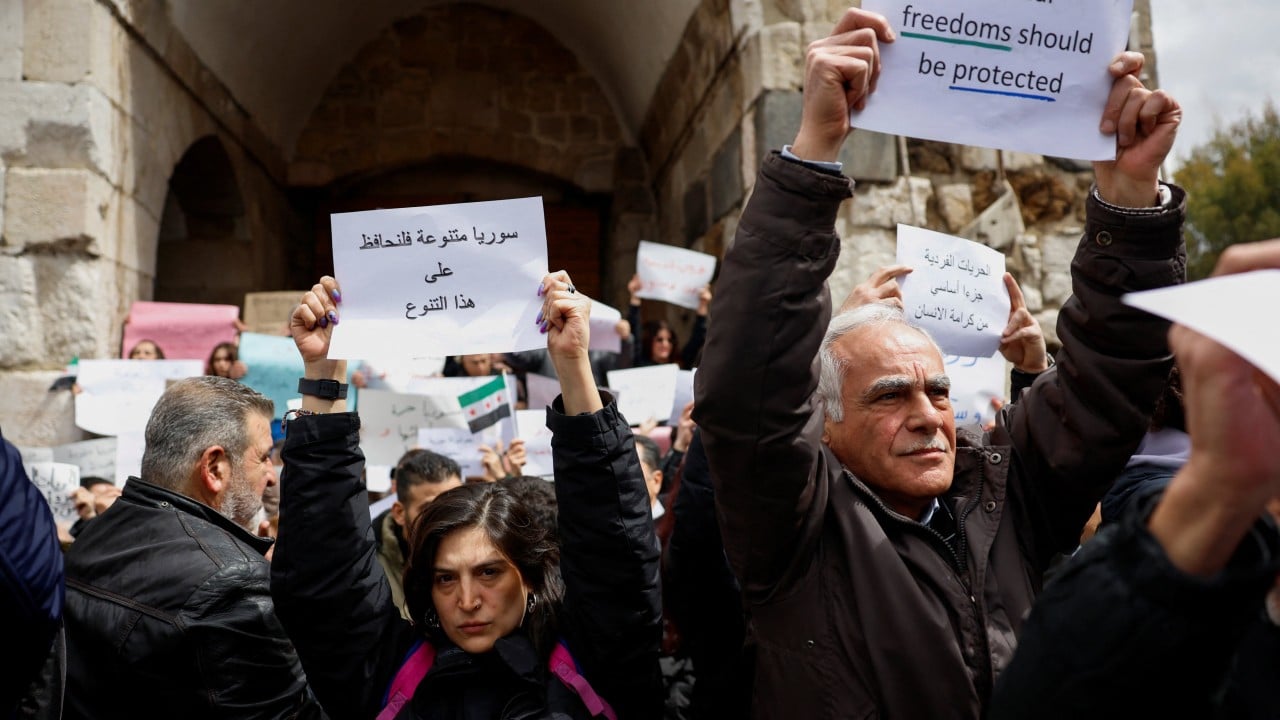
The crowds gathered last week weren't just "protestors" in the clinical sense. They were teachers, mechanics, and grandmothers. They stood in the heat, not because they were desperate for a gin and tonic, but because they were desperate to be seen as adults capable of making their own choices.
"We survived ISIS at our doorstep," one young man shouted over the din of the crowd. "We survived the bombs. Are we now to be defeated by a council that thinks it is our collective conscience?"
His voice cracked. It wasn't anger; it was exhaustion.
The stakes are invisible until they are gone. People often confuse "freedom" with "grandeur." They think it’s about voting in a massive booth or giving a speech on a podium. But real freedom is found in the mundane. It’s the freedom to open a shop. The freedom to sit on a balcony with a glass of wine and watch the sunset. The freedom to be left alone.
In Sweida, the "Blue Moon" is still dark. Fadi still wipes the counter. The bottles that remain are dusty, huddled together like refugees in their own home.
The authorities might win this specific skirmish. They might successfully clear the shelves and padlocks the doors. They might even scrub the advertisements off the walls. But they are learning a hard truth that has toppled empires before them: you can take the bottle off the table, but you cannot force a person to thirst for the world you are trying to build.
The protest continues, not in the streets, but in the stubborn, quiet refusal of a population to let their private lives be dictated by the temporary whims of the powerful.
The glass is empty, but the resolve is full.