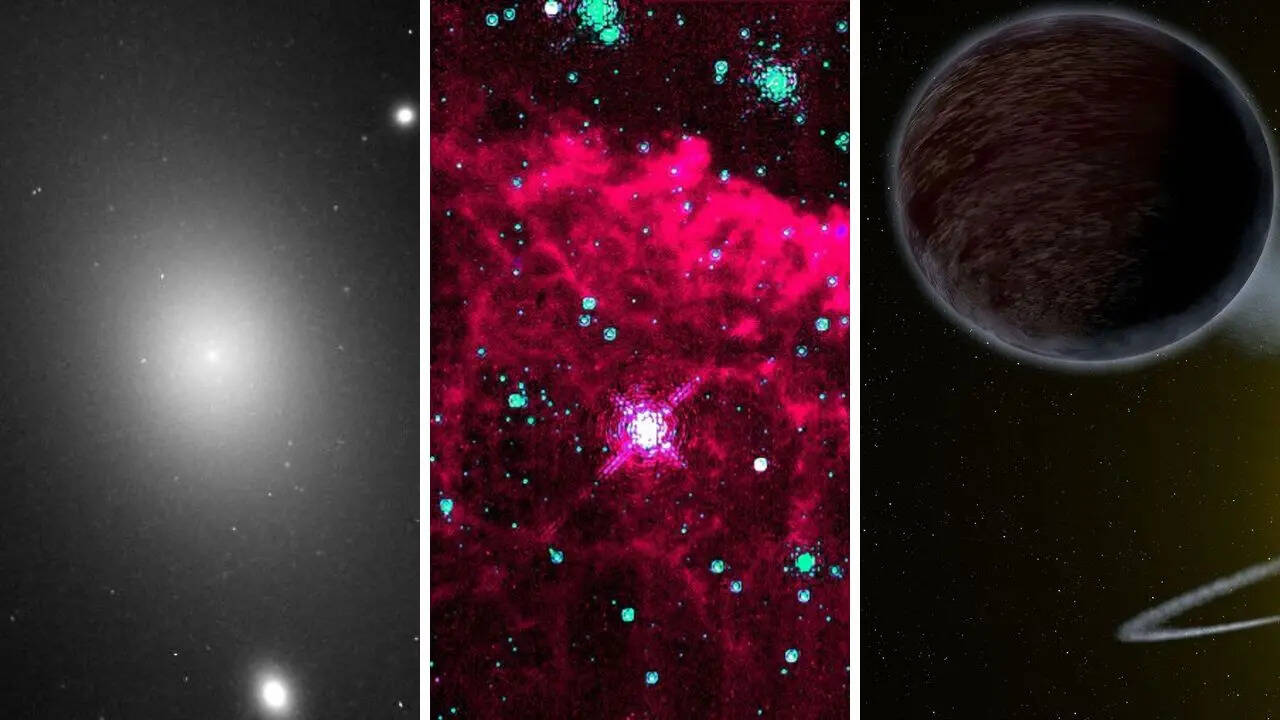
Space is not merely an empty void or a backdrop for glittering constellations. It is a kinetic, chemical, and radiological meat grinder that humanity is currently trying to inhabit with tools that are often barely up to the task. While popular science focuses on the beauty of nebulae, the reality of orbital mechanics and physics reveals a hostile environment where even the laws of chemistry turn against you. The immediate threats are not just the lack of oxygen, but the aggressive behavior of matter itself when stripped of an atmosphere.
Understanding the danger starts with Cold Welding. In the pressurized, moisture-rich environment of Earth, metals develop a thin layer of oxidation when exposed to air. This serves as a protective skin. In the vacuum of space, that skin never forms. If two pieces of the same highly polished metal touch, they do not just sit next to each other; they fuse. The atoms of one piece have no way of knowing they are distinct from the atoms of the other. They become a single, solid object.
This isn't a theoretical curiosity. It is a mechanical nightmare for satellite deployments and long-term lunar habitats. One stuck hinge or a fused docking hatch could end a mission before it begins. We are throwing delicate machinery into a furnace of vacuum where the very materials we use to build them want to melt into one another without a spark.
The Liquid Reality of Your Blood
Movies love to show people exploding or instantly freezing in space. Both are wrong. You wouldn't explode because your skin and circulatory system are surprisingly good at containing pressure. You wouldn't freeze instantly because space is a vacuum, and a vacuum is a perfect insulator. Without air to carry heat away from your body through convection, you would actually struggle with overheating before you ever turned into an ice cube.
The real horror is Ebullism. At the near-zero pressure of a vacuum, the boiling point of liquids drops below the internal temperature of the human body. Your blood wouldn't boil in your veins because your circulatory system maintains enough internal pressure to prevent it. However, the moisture on your tongue, in your eyes, and in the linings of your lungs would begin to evaporate instantly.
In 1966, a NASA technician named Jim LeBlanc was accidentally exposed to a near-vacuum in a test chamber. He remained conscious for about 14 seconds. His last memory before passing out? The sensation of the saliva on his tongue beginning to bubble. He survived because his colleagues re-pressurized the chamber within a minute, but the incident proved that the transition from life to a state of biological failure is measured in heartbeats, not minutes.
The Shrapnel Shell Surrounding Earth
We have turned the immediate vicinity of our planet into a shooting gallery. This isn't about rogue asteroids. It is about Kessler Syndrome. Every time a spent rocket stage is left in orbit, or a satellite is destroyed in a weapons test, thousands of fragments are created. These fragments travel at orbital velocities—roughly 17,500 miles per hour.
At that speed, a fleck of paint has the kinetic energy of a fast-moving bullet. A marble-sized piece of debris can strike with the force of a hand grenade. We are currently tracking over 25,000 pieces of debris larger than a softball, but there are millions of smaller pieces that are untraceable.
If two large satellites collide, they create a cloud of debris. That cloud then strikes other satellites, creating more debris. This creates a cascading effect that could eventually render Low Earth Orbit (LEO) completely unusable. We could effectively trap ourselves on Earth, unable to launch new missions because the barrier of high-speed trash would shred anything trying to pass through it. This isn't a future problem. It is a current engineering hurdle that every launch provider must calculate for daily.
The Chemical Toxicity of Moon Dust
When we eventually return to the Moon to stay, the primary killer won't be a lack of air. It will be the dirt. On Earth, wind and water erode rocks over millions of years, smoothing out their edges. On the Moon, there is no weather. The "soil," or Regolith, is created by eons of meteorite impacts that shatter lunar rock into microscopic, glass-like shards.
Lunar dust is jagged, abrasive, and electrostatic. It clings to everything. During the Apollo missions, astronauts found that the dust ate through the outer layers of their space suits and jammed the joints of their tools. Even worse, once they stepped back into the Lunar Module and took off their helmets, they smelled a scent like spent gunpowder. They were inhaling microscopic glass needles.
Long-term exposure to regolith leads to a condition similar to silicosis or "miner's lung." It causes inflammation, scarring, and eventually, the destruction of lung tissue. We are planning bases on a surface covered in a substance that acts like asbestos on steroids, and we still haven't perfected a way to keep it out of our living quarters.
The Great Silence and the Light Speed Trap
The sheer scale of space introduces a psychological horror that is hard to quantify. We talk about the "vastness," but we rarely grapple with the Latency of Reality. If something goes wrong on a mission to Mars, the shortest time it takes for a radio signal to reach Earth is about three minutes. At the furthest point in the orbits, it can take over 20 minutes.
This means if a Martian colony has a critical life-support failure, they are entirely alone. By the time Earth even hears the "Mayday," the crew might have been dead for a quarter of an hour. The speed of light is a hard universal speed limit that creates a profound isolation. You aren't just far away in miles; you are far away in time.
Solar Storms and the Radiation Lottery
The Earth's magnetic field and atmosphere act as a shield, soaking up the brunt of the Sun’s temper tantrums. In deep space, that shield is gone. A Coronal Mass Ejection (CME)—a massive blast of solar plasma—can occur at any time. If an astronaut is on a spacewalk or in a lightly shielded craft when a high-energy solar particle event hits, they are receiving a lethal dose of radiation in minutes.
The radiation doesn't just cause cancer years later. Acute radiation poisoning in space would lead to nausea, vomiting, and the rapid breakdown of the central nervous system. On a long-haul flight to Mars, the ship itself becomes a secondary source of radiation. When high-energy cosmic rays hit the metal hull of a spacecraft, they shatter the atoms in the metal, creating a secondary shower of neutrons and subatomic particles that zip through the bodies of the crew.
The Smell of the Abyss
One of the most haunting facts reported by almost every astronaut who has conducted a spacewalk is that space has a distinct odor. When they return to the airlock and repressurize, their suits and tools carry a scent that shouldn't exist in a vacuum. They describe it as seared steak, hot metal, and welding fumes.
This isn't the smell of space itself, but the result of high-energy vibrations in particles that cling to the suit. Some researchers believe it is the smell of polycyclic aromatic hydrocarbons—sooty molecules that permeate the universe. Others believe it is the result of atomic oxygen sticking to the suit and then reacting suddenly when it hits the nitrogen-oxygen mix of the station. Regardless of the cause, it is a visceral reminder that the vacuum is a chemically reactive environment that sticks to you, follows you inside, and lingers in the back of your throat.
The Reality of Decompression Sickness
A space suit is essentially a human-shaped balloon. If you were to pressurize it to the same level as Earth's sea-level atmosphere (14.7 psi), the suit would be so stiff that the astronaut wouldn't be able to bend their arms or legs. To solve this, NASA suits operate at a much lower pressure, around 4.3 psi, and use 100% oxygen.
Before an astronaut can go outside, they have to spend hours "pre-breathing" pure oxygen. This is to purge nitrogen from their blood. If they didn't, the sudden drop in pressure from the station to the suit would cause the nitrogen to form bubbles in their joints and bloodstream—the same "bends" that deep-sea divers face. Even with these precautions, a suit puncture doesn't just mean losing air; it means your blood chemistry becomes a chaotic mess of gas bubbles that can cause strokes or embolisms instantly.
The Darkness is Not Just an Absence of Light
When you look at the sky from Earth, the atmosphere scatters sunlight, creating the blue haze we see during the day. In space, there is no scattering. If you stand in the shadow of a lunar crag or a space station module, the transition from blinding sunlight to total, absolute pitch black is instantaneous. There is no twilight. There is no gradual dimming.
This creates a massive problem for depth perception and navigation. Astronauts often find it impossible to tell if an object is small and close or huge and miles away. The human eye, evolved to work within an atmospheric filter, struggles to process the raw, unfiltered glare of a star against the perfect blackness of a void. It is a disorienting, alien visual landscape that makes every physical movement a calculated risk.
We are not built for this. Every second a human spends outside the protective cocoon of Earth is a defiance of biological reality. We aren't just fighting the lack of air; we are fighting a landscape where the physics of heat, light, and matter are fundamentally hostile to the carbon-based structures we call our bodies.
Space doesn't want you there, and it has a million silent ways to prove it.