The Theatre of the Victim
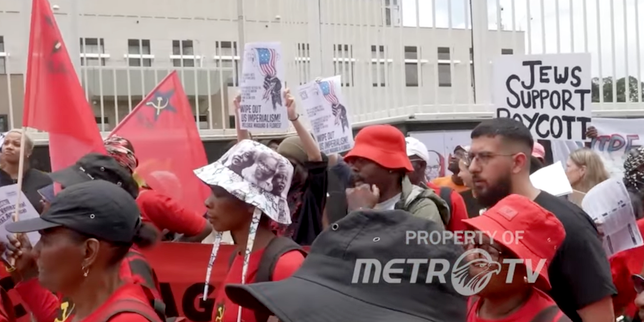
The streets of Pretoria are currently a stage for a very expensive, very dangerous delusion. Thousands are marching under the banner of "defending sovereignty," convinced that Washington is the puppet master behind South Africa’s domestic decay. It’s a convenient narrative. It’s also a lie.
When you hear a politician scream about "Western pressure," what they are actually saying is: "Please don't look at our failing power grid or our 32% unemployment rate." Sovereignty isn't something you defend with a placard; it’s something you earn with a functional economy. South Africa is currently trading its actual independence for the warm, fuzzy feeling of being a "revolutionary" holdout in a world that has moved on.
The competitor narrative suggests these protests are a grassroots uprising against American imperialism. They aren't. They are a coordinated PR campaign to mask a pivot toward a BRICS alignment that offers plenty of photo ops but zero structural reform.
The False Binary of Neutrality
The "lazy consensus" in current political analysis is that South Africa is "balancing" its relationships between the Global North and South. This is a misunderstanding of how global capital works.
South Africa's trade with the EU and the US dwarfs its trade with the Russian Federation by an order of magnitude. In 2023, South Africa’s exports to the US via the African Growth and Opportunity Act (AGOA) supported roughly 60,000 jobs directly. To pretend that "sovereignty" means biting the hand that feeds your manufacturing sector is not brave. It’s economic malpractice.
The AGOA Illusion
Critics claim the US uses AGOA as a "weapon."
- Reality check: AGOA is a unilateral trade preference. It is a gift, not a treaty.
- The Nuance: The US isn't "pressuring" South Africa; it is enforcing the terms of a contract that South Africa signed. If you join a club and break the rules, you don't get to cry "imperialism" when the bouncer asks you to leave.
I’ve watched emerging markets pull this stunt before. They flirt with geopolitical rivals of the West to "leverage" better deals. It works for Turkey because Turkey controls the Bosphorus. It doesn't work for South Africa because, frankly, the global supply chain can route around Durban far easier than Pretoria wants to admit.
Russia and the Ghost of the Cold War
The obsession with "sovereignty" in the context of the Ukraine-Russia conflict is rooted in a nostalgic, misplaced debt to the Soviet Union for its support during the anti-apartheid struggle.
Let’s be brutally honest: The Soviet Union that supported the ANC no longer exists. The current Russian Federation is a petro-state with a GDP smaller than Italy’s. It cannot build your infrastructure. It cannot buy your minerals at scale. It cannot solve your energy crisis.
When the Lady R docked in Simon's Town, the "sovereignty" crowd cheered. They saw it as a middle finger to the West. But what did that middle finger cost? It cost a massive hit to the Rand and a spike in the cost of borrowing. Every time a politician "defends sovereignty" by cozying up to Moscow, the average South African pays for it in the price of bread and fuel.
Thought Experiment: The BRICS Bank Fantasy
Imagine a scenario where the New Development Bank (the BRICS bank) completely replaces the IMF and World Bank for South Africa’s financing needs.
- Transparency: The terms would likely be opaque, tied to resource extraction rather than fiscal reform.
- Currency: Lending in Renminbi or Rubles creates a debt trap that makes 1990s structural adjustment look like a spa day.
- Result: South Africa trades a seat at a table of democratic peers for a subservient role in a block dominated by a single superpower: China.
Is that sovereignty? Or is it just a change in management?
The Real Threat is Internal, Not Imperial
The "People Also Ask" section of this debate usually focuses on "Is the US meddling in South African elections?"
The answer is: They don't need to. South Africa is doing a perfectly good job of destabilizing itself.
The focus on "external pressure" is a classic diversionary tactic. If you can convince the populace that the CIA is responsible for the potholes and the blackouts, you don't have to explain where the R500 billion for COVID relief went.
True sovereignty requires:
- Energy Security: You cannot be sovereign if you cannot keep the lights on.
- Legal Certainty: You cannot be sovereign if your ports are choked by corruption.
- Economic Diversity: You cannot be sovereign if your entire fiscal policy relies on the commodity cycle.
The protesters in Pretoria are asking the wrong question. They are asking "How do we stop the West from telling us what to do?" They should be asking "How do we make ourselves so indispensable that it doesn't matter what they think?"
Stop Romanticizing the Struggle
South Africa’s foreign policy is currently dictated by a group of aging elites who are still fighting the battles of 1985. They view international relations through a lens of "solidarity" rather than "interest."
This is a luxury the country can no longer afford.
I’ve seen this play out in Zimbabwe. I’ve seen it in Venezuela. The rhetoric of "anti-imperialism" is the final refuge of a government that has failed to deliver on its basic promises. When the water stops flowing, the leaders start talking about the "arrogance of the West."
The Hard Truth: The West isn't trying to colonize South Africa; it's trying to figure out if South Africa is still a viable place to park capital. If the answer is "no," the West won't invade. They will just leave. And in the 21st century, being ignored by global capital is a far worse fate than being "pressured" by it.
The Actionable Path Forward
If South Africa wants real sovereignty, it needs to:
- Ditch the Non-Aligned Pose: Pick a side that actually builds things. If it’s China, go all in and accept the consequences. If it’s the West, stop the theatrical antagonism.
- Privatize the Albatrosses: Sell off the failing state-owned enterprises that drain the treasury. A sovereign nation shouldn't be held hostage by its own national power utility.
- Reform Labor Laws: Make it possible to hire people. The current "protectionist" stance is actually a barrier to entry for the millions of young people currently marching for the wrong things.
The Cost of the Moral High Ground
South Africa prides itself on its "moral" foreign policy. It takes Israel to the ICJ. It refuses to condemn Russia. It talks about a "multipolar world."
All of this would be fine if the domestic foundation was solid. But it isn't. You cannot lead the Global South from a position of fiscal ruin.
Every time a diplomat makes a "bold" statement in New York or Geneva that alienates a major trade partner, they are effectively taxing the poor in Soweto. This isn't "standing up for your rights." It is performative vanity.
The global order is shifting. That much is true. But "sovereignty" isn't a shield you hide behind to avoid accountability; it’s a tool you use to build wealth. Right now, South Africa is using its sovereignty to burn its own bridges while the rest of the world watches with diminishing interest.
Marching against "American pressure" is easy. Fixing a rail network is hard. The people in the streets should realize that the most "imperialist" thing happening in South Africa right now is the systemic theft of their future by leaders who use "sovereignty" as a cloak for incompetence.
The world doesn't owe South Africa a living because of its history. History is a liability. Only the present matters. And at present, the "defense of sovereignty" is just a fancy name for national decline.
Get back to work. Stop blaming the map for the fact that you can't drive the car.