The Invisible Cost of Persistence
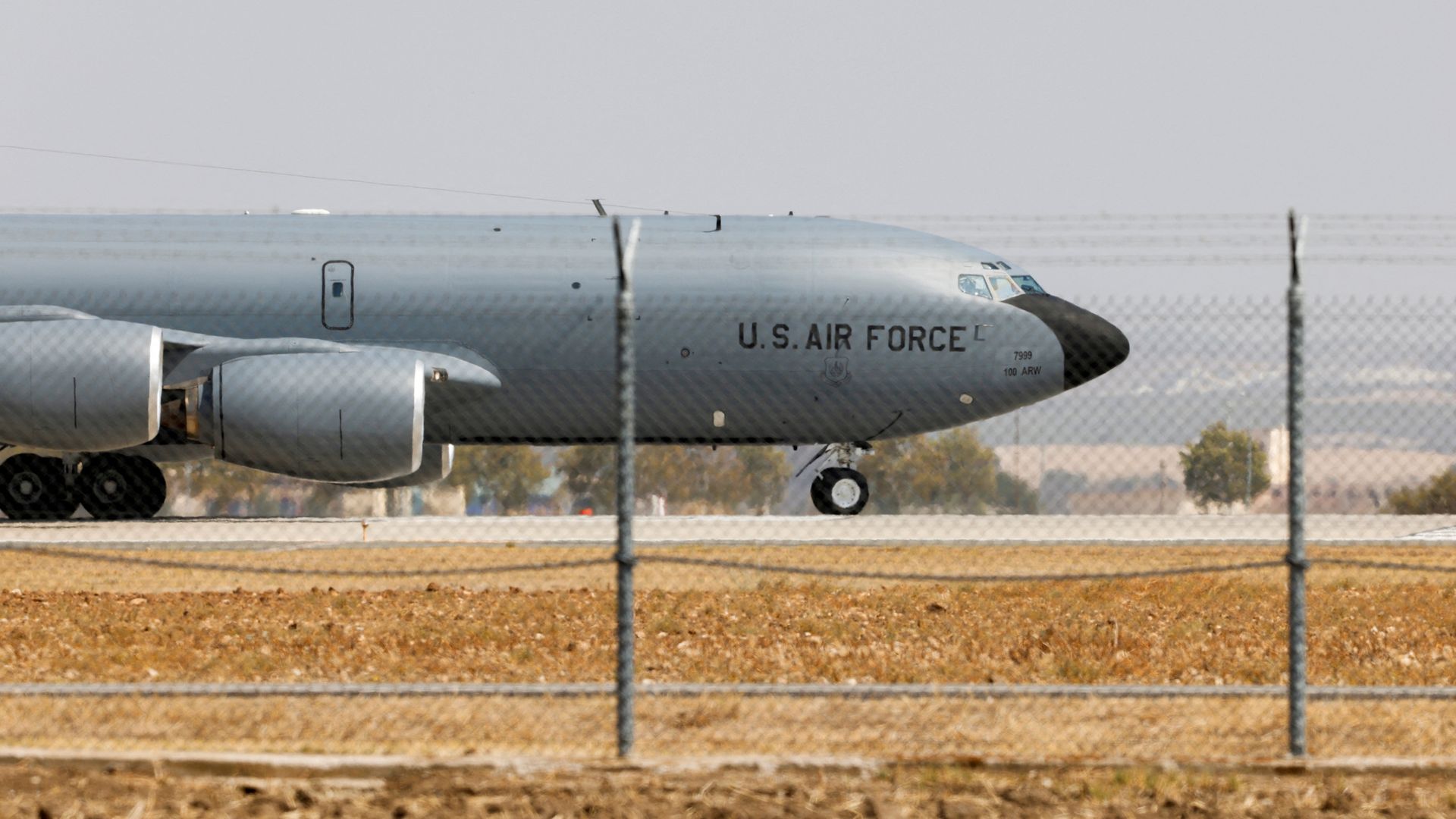
The headlines are predictable. They focus on the tragedy, the twisted metal in the Iraqi desert, and the loss of life. While the human element is undeniably somber, the mainstream media’s obsession with the "crash" narrative ignores the systemic rot that makes these incidents inevitable. We are not just looking at a mechanical failure or a pilot error. We are looking at the terminal stage of an overextended aerial strategy that treats 60-year-old airframes like modern assets.
The consensus view treats these crashes as isolated tragedies. They aren't. They are data points in a trend of strategic exhaustion. When a refueling plane goes down in a theater like Iraq, the "lazy consensus" blames the environment or the immediate maintenance crew. The deeper truth is that the United States is running a high-stakes logistics game using equipment that belongs in a museum, and we are paying for that arrogance in blood and titanium.
The Myth of the "Workhorse"
Defense contractors and Pentagon spokespeople love the word "workhorse." It’s a linguistic shield used to justify why the KC-135 and its derivatives are still flying decades past their intended retirement. In any other industry, using a machine built during the Eisenhower administration to perform high-pressure, high-heat maneuvers would be considered criminal negligence. In the military, we call it "operational readiness."
Let’s dismantle the math. The structural integrity of these aircraft is subject to $fatique$, a cumulative result of stress cycles that no amount of "retrofitting" can truly erase.
$$S = \frac{P}{A}$$
Where $S$ is stress, $P$ is the load, and $A$ is the cross-sectional area. As $A$ decreases through microscopic corrosion and $P$ increases due to the frantic pace of modern sorties, the margin for error hits zero. We are asking crews to fly flying gas stations that are literally shedding molecules every time they hit a pocket of turbulence.
I have watched logistics officers scramble to find parts for these planes on eBay or in "boneyards" in Arizona because the original manufacturers stopped making the components before the current pilots were even born. That isn't a "proven platform." It’s a liability.
Iraq is a Graveyard for Static Thinking
The crash in Iraq highlights a specific, uncomfortable reality: the Middle East is no longer a "permissive environment," even for non-combat support craft. The assumption that a slow, lumbering refueler can operate with impunity is a relic of 1990s thinking.
The heat alone in the Iraqi theater changes the calculus of engine performance and lift.
- Density Altitude: High temperatures decrease air density, forcing engines to work harder and reducing the cooling efficiency of the fuel itself.
- Abrasive Contaminants: Fine particulate matter in the region acts as a liquid sandpaper on turbine blades.
- Operational Tempo: We are asking these planes to stay in the air for durations that defy their maintenance schedules.
The "experts" will ask: "What went wrong with the flight controls?"
The real question is: "Why was this specific airframe authorized for a high-risk theater when its service life was technically exhausted in 2012?"
The Billion-Dollar Procurement Trap
The Boeing KC-46 Pegasus was supposed to solve this. Instead, it became a masterclass in how not to build an airplane. With "remote vision system" glitches that made it dangerous to actually refuel planes, the successor to the old fleet became a bigger joke than the hardware it was meant to replace.
When the new tech fails, the military defaults back to the old tech. This creates a "death loop."
- New tech is delayed due to bureaucratic bloat.
- Old tech is pushed 20% harder to cover the gap.
- Maintenance cycles are shortened or ignored to meet mission demands.
- A catastrophic failure occurs.
- The media reports it as an "accident."
This isn't an accident. It's an inevitable outcome of a procurement system that prioritizes corporate subsidies over pilot safety. We are addicted to the "big wing" refueling concept because it supports our global power projection, but we refuse to pay the literal price of upgrading that projection for the 21st century.
The Human Error Distraction
Expect the official report to eventually point toward "crew disorientation" or "procedural deviations." It’s the easiest way to close a file. It shifts the blame from the Pentagon’s budget office to the people who can no longer defend themselves.
But consider this: if a pilot is forced to manage a manual override on a hydraulic system that should have been automated forty years ago, while flying in 115-degree heat, is it "human error" when the system finally snaps?
Imagine a scenario where a commercial airline operated with the same average fleet age as our tactical refueling wings. The FAA would ground the entire carrier within an hour. Yet, because this carries the weight of "national security," we accept a level of risk that is objectively insane.
Autonomous Refueling or Bust
The contrarian solution isn't "better maintenance." You cannot polish a ghost. The solution is the immediate, aggressive pivot to autonomous, unmanned refueling tankers.
- Remove the Human Risk: There is no reason a human crew needs to be sitting on 200,000 pounds of jet fuel in a non-stealthy, aging bus.
- Distributed Foraging: Instead of one massive KC-135, we should be using a swarm of smaller, modular drones. If one crashes, you lose a circuit board, not a flight crew.
- Lower Weight, Higher Efficiency: Removing life-support systems and cockpit avionics allows for more fuel capacity and better structural ratios.
The industry resists this because a drone doesn't require a massive training pipeline or a career path for officers. It’s a threat to the "pilot culture" that dominates the Air Force. But that culture is currently killing its own people by clinging to the romantic notion of the "manned" tanker.
The Wrong Questions are Being Asked
People ask: "How can we make the KC-135 safer?"
Wrong. The question is: "How do we kill the KC-135 before it kills everyone left in the cockpit?"
People ask: "Was it mechanical or weather-related?"
Wrong. The question is: "Why are we still using Iraq as a justification for 24/7 orbits that serve no clear strategic end?"
We have turned the sky into a high-stakes gambling parlor. Every time one of these tankers takes off, we are betting that the metal fatigue won't reach the breaking point today. In Iraq, that bet failed. It will fail again in six months, or a year, or tomorrow.
Stop looking at the wreckage and start looking at the budget sheets. The planes didn't just fall out of the sky; they were pushed out by a system that values the appearance of strength over the reality of engineering.
If you want to honor the crews, stop calling their deaths "accidents." Call them what they are: the cost of doing business with an obsolete empire.
Ground the fleet. Automate the mission. Or keep buying coffins. There is no middle ground left.


