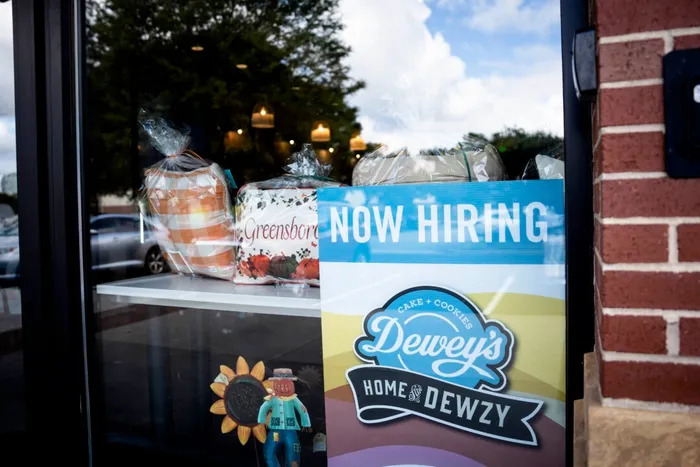
The economy isn't breaking, but it’s definitely cooling off. If you’ve been watching the weekly jobless claims numbers, it’s easy to get caught up in the noise of the "low firing, low hiring" loop we’ve been stuck in. For the week ending February 28, initial unemployment claims held steady at 213,000. It’s a number that looks boring on paper, but in the context of a labor market that just shed 92,000 jobs in February, it’s a massive flashing yellow light.
Most people look at jobless claims as a rearview mirror. That’s a mistake. They’re actually a real-time pulse of corporate anxiety. When claims stay flat while hiring craters—as we saw in the latest Department of Labor data—it tells you that companies are paralyzed. They aren’t ready to fire everyone yet, but they’ve completely stopped inviting new people to the party.
The Stabilization Myth and the February Shock
Economists love the word "stabilization." They’ve been using it for months to describe the 2026 labor market. But after the February jobs report delivered a 92,000-job loss—way worse than the 60,000 gain most experts predicted—that word feels a bit hollow. We aren't stabilizing; we're stalling.
The disconnect between steady weekly claims and a shrinking monthly payroll is where the real story lives. Initial claims at 213,000 suggest that the "firing" side of the equation is historically low. Usually, when the economy loses 90k jobs, you'd expect to see claims spiking toward 250,000 or 300,000. That hasn't happened. Instead, we have a "frozen" market. People are staying in the jobs they have because they’re scared to quit, and employers are keeping the staff they have because they’re scared they won't be able to find replacements if the market turns again.
Breaking Down the Sector Losses
If you think this is just about one bad month, look at where the hits are coming from. This isn't just a tech story anymore.
- Healthcare: Lost 28,000 jobs. Sure, some of that was a nurses' strike in California, but physician offices and ambulatory care also saw weirdly high drops.
- Leisure and Hospitality: Down 27,000. This is usually the engine of the service economy. If people aren't hiring at bars and restaurants, consumer discretionary spending is likely hitting a wall.
- Manufacturing: Shed 12,000 jobs. This sector has been underwater for 14 of the last 15 months.
The only thing keeping the headline unemployment rate at 4.4% is the fact that people are dropping out of the labor force entirely. The participation rate dipped to 62.0% in February. When people stop looking for work, they aren't counted as "unemployed," which makes the 4.4% figure look better than it actually is.
The Fed is Stuck Between a Rock and a Rate Cut
Jerome Powell and the Federal Reserve are in a brutal spot. In January, they kept rates at 3.50% to 3.75%, basically saying they needed more data. Well, they got it, and it's ugly. The Fed usually cuts rates to jumpstart hiring, but with energy prices jumping 7 cents overnight due to the conflict in Iran, inflation is still a ghost in the room.
Fed Governor Michelle Bowman recently pointed to "signs of stabilization," but that was before the February payroll data landed like a lead balloon. The central bank is now split. One side fears that keeping rates high will turn this "soft patch" into a full-blown recession. The other side worries that cutting rates too soon will let inflation run wild again, especially with those $3.32 gas prices hitting family budgets.
What This Means for Your Career Strategy
If you're waiting for a "booming" market to make a move, you're going to be waiting a long time. The "speed limit" for the 2026 economy has shifted. We're seeing the lingering effects of 2025's government shutdowns and the unpredictable nature of global tariffs.
Honestly, the "wait and see" approach most companies are taking is your biggest hurdle. If you're looking for work, you have to realize that recruiting pipelines are loosening but hiring bars are getting higher. Companies aren't hiring for "growth" anymore; they're hiring for "necessity."
Don't ignore the revisions. The Labor Department didn't just report a bad February; they slashed 69,000 jobs from the December and January reports. December actually showed a net loss of 17,000 jobs once the dust settled. This means the weakness started earlier and is deeper than we thought.
Stop looking at the 213,000 jobless claims as a sign of health. It’s a sign of a market that is holding its breath. Whether it exhales or starts choking depends entirely on the Fed's next move in March and whether energy prices settle down. If you're an employer, now is the time to focus on "reskilling" rather than "rehiring." It's cheaper to train the person you have than to find someone new in a market where everyone is too afraid to move.
Keep your resume updated and your skills sharp. We're moving into a period where "stable" is the new "growth," and you don't want to be the one caught off guard if that 213,000 floor finally gives way.