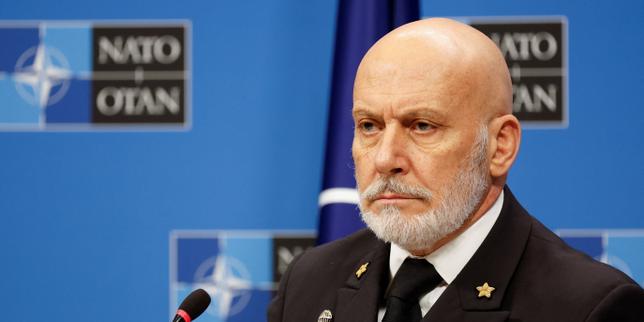
The structural dependency of European defense on United States power projection is transitioning from a political choice to a systemic vulnerability. As the United States shifts its primary strategic focus toward the Indo-Pacific, the North Atlantic Treaty Organization (NATO) faces a fundamental reconfiguration of its operational logic. Admiral Giuseppe Cavo Dragone’s recent assertions regarding European nations "taking the relay" are not merely diplomatic gestures; they describe a necessary shift in the global security architecture where Europe must move from being a consumer of security to a primary provider within its own theater.
This transition is governed by three critical variables: kinetic readiness, industrial throughput, and the technological integration of multi-domain operations.
The Triad of Operational Responsibility
The traditional NATO model relied on a "Hub and Spoke" system where the U.S. provided the heavy lift, strategic intelligence, and nuclear umbrella, while European allies provided regional basing and specialized niche capabilities. This model is currently failing due to the emergence of simultaneous high-intensity threats. The new framework for European defense must be analyzed through three distinct pillars.
1. The Regional Lead Framework
European nations are no longer supplementary forces. In the event of a conflict on the Eastern Flank or a crisis in the Mediterranean, the initial 30 to 60 days of high-intensity engagement must now be sustained almost exclusively by European "Tier 1" militaries. This requires a shift in force structure from expeditionary counter-insurgency units back to heavy mechanized divisions capable of territorial defense.
2. Strategic Enabler Autonomy
The primary bottleneck for European independence is not troop count, but "strategic enablers." These include:
- Air-to-Air Refueling (AAR): Without U.S. tankers, European air forces lose 60% of their sustained sortie capacity.
- Satellite Intelligence and Early Warning: The reliance on U.S. space assets for real-time targeting data creates a hard ceiling on autonomous European operations.
- Strategic Lift: The ability to move heavy armor across the continent or into North Africa without relying on U.S. C-17 fleets remains a critical failure point.
3. The Industrial Attrition Reality
Modern warfare has exposed the "Just-in-Time" fallacy of European defense procurement. Current munitions consumption rates in high-intensity environments exceed production capacity by a factor of five. Transitioning to a "Just-in-Case" model requires massive capital expenditure in production lines that may remain idle during peacetime—a political hurdle that most European parliaments have yet to clear.
The Cost Function of Fragmented Procurement
Europe spends roughly $300 billion annually on defense, yet its combined combat power is a fraction of the United States, which spends roughly $800 billion. This inefficiency is a direct result of the "Fragmentation Penalty."
The United States operates one main battle tank (MBT) platform, the M1 Abrams. In contrast, European nations operate over a dozen different MBT variations (Leopard 2, Challenger, Leclerc, Ariete, and various legacy Soviet models). This creates a logistical nightmare for interoperability.
The cost function of this fragmentation can be expressed as:
$$C_{total} = \sum_{i=1}^{n} (P_i + L_i + R_i)$$
Where:
- $P$ is the procurement cost of unique platforms.
- $L$ is the specialized logistics chain for each platform.
- $R$ is the redundant R&D for competing systems.
This fragmentation prevents the realization of economies of scale. To "take the relay" from the U.S., Europe must move toward the "Europeanization of Defense Industry," prioritizing the Permanent Structured Cooperation (PESCO) projects that aim for commonality in air defense, maritime platforms, and next-generation fighter technology.
Multi-Domain Integration and the Digital Front
The battlefield is no longer limited to the physical dimensions of land, sea, and air. The integration of cyber and space domains is where the U.S. currently holds an insurmountable lead. If European nations are to act as the primary deterrent, they must develop a sovereign "Cloud of Combat."
Data Sovereignty and AI in Command
The speed of decision-making in modern conflict is dictated by the ability to process vast amounts of sensor data. European reliance on U.S.-made software and data architectures creates a "black box" problem. If the U.S. decides to prioritize data bandwidth for a Pacific contingency, European commanders could find themselves digitally blinded. Developing a sovereign European battle management system is not a luxury; it is a prerequisite for command autonomy.
The Drone and EW Convergence
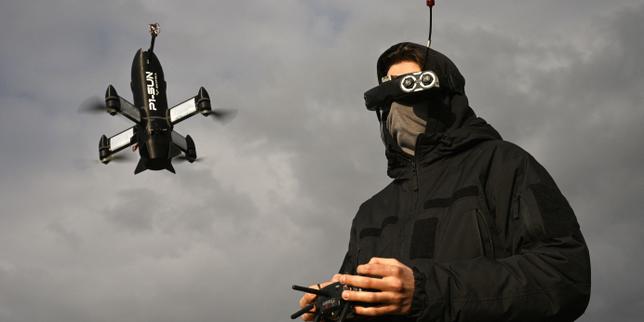
The conflict in Ukraine has demonstrated that electronic warfare (EW) and unmanned aerial systems (UAS) are now the primary arbiters of tactical success. European defense contractors have historically focused on high-end, expensive platforms (like the Eurofighter). There is a desperate need for a "Low-Cost, High-Volume" tier of autonomous systems that can be produced at scale and used to saturate enemy defenses.
Bottlenecks to Collective Defense
Several friction points prevent the immediate implementation of the "relay" strategy. Identifying these allows for targeted policy interventions.
The Military Schengen Problem
Moving a brigade from Spain to Poland currently requires weeks of diplomatic clearances and faces physical infrastructure limitations (bridges not rated for 70-ton tanks, varying rail gauges). Without a "Military Schengen" agreement that allows for the frictionless movement of troops and materiel across borders, any promise of European defense is a paper tiger.
The Nuclear Umbrella Divergence
As the U.S. focuses on China, the credibility of the U.S. nuclear umbrella over Europe faces renewed scrutiny. This forces a difficult conversation between France (the only EU nuclear power) and the rest of the continent. Can the French Force de Frappe be extended to protect the Baltics? The political and technical integration required for such a shift is unprecedented and currently lacks a clear roadmap.
Quantifying the Investment Gap
To reach a state where European nations can truly relieve U.S. forces, the 2% GDP spending target is likely insufficient. Military analysts suggest that 3% is the realistic floor when factoring in the need to replace decades of decommissioned hardware and build new R&D pipelines.
The investment must be prioritized in the following order:
- Deep Strike Capabilities: Tactical and cruise missiles to degrade enemy logistics before they reach the border.
- Integrated Air and Missile Defense (IAMD): Creating a "Sky Shield" that can protect civilian infrastructure from hybrid and conventional threats.
- Human Capital: Recruiting and retaining technical specialists in cyber, EW, and drone operations, where the private sector currently outcompetes the military on wages.
The Strategic Shift from Atlanticism to Continentalism
The geopolitical reality is that the "relay" is not a temporary handover but a permanent restructuring. The United States will remain a NATO ally, but its role will shift from the "first responder" to the "strategic reserve."
European leadership must now execute a three-stage plan:
- Stage 1 (Internal Consolidation): Standardize munitions and logistics across the EU 27 to reduce the fragmentation penalty.
- Stage 2 (Strategic Enabler Development): Fund and deploy sovereign European satellite constellations and heavy-lift fleets.
- Stage 3 (Command Autonomy): Establish a permanent EU/European NATO operational headquarters capable of planning and executing major joint operations without U.S. intervention.
The success of this transition determines whether Europe remains a global power or becomes a buffer zone between competing superpowers. The clock on this transition began when the first U.S. pivot to Asia was announced; it has now reached a critical velocity that requires immediate industrial mobilization.
The strategic play is no longer about "spending more," but about "spending together" to eliminate the redundancies that have historically weakened the European pillar of the alliance. If the European defense industry cannot unify under a single technological and logistical standard, the continent will remain a collection of sophisticated but fragmented forces, incapable of the sustained high-intensity conflict required for modern deterrence.
The immediate priority is the establishment of a European Defense Fund specifically for the mass production of standardized 155mm artillery, long-range loitering munitions, and mobile air defense systems. This creates the baseline capability necessary for territorial defense, allowing the U.S. to focus its high-end maritime and aerospace assets on the Pacific theater without leaving a power vacuum in the Atlantic.