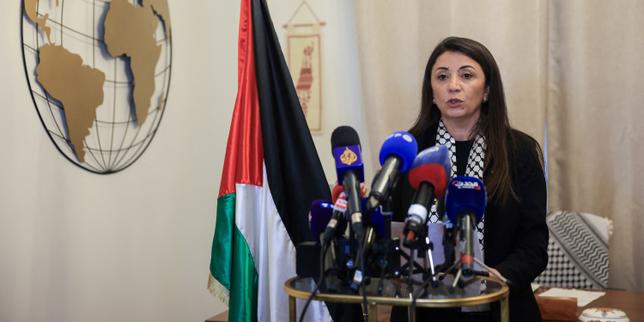
The elevation of the Palestinian Representation in France to the status of a "Mission of Palestine," with its head now holding the rank of Ambassador, represents a calculated recalibration of bilateral protocol rather than a sudden shift in international law. This transition operates on three distinct levels: symbolic recognition, administrative authority, and diplomatic signaling within the European Union. While the move stops short of full de jure state recognition, it alters the "cost of engagement" for French officials and sets a new baseline for how the Palestinian Authority (PA) interacts with the Quai d'Orsay.
The Mechanics of Diplomatic Status Elevation
To understand why this change matters, one must dissect the hierarchy of diplomatic missions. Most nations interact through a standardized framework established by the 1961 Vienna Convention on Diplomatic Relations. However, entities that do not have universally recognized statehood often operate under "General Delegations" or "Representations."
The shift from a General Delegation to a Mission of Palestine introduces three functional upgrades:
- Protocolar Primacy: The head of the mission no longer sits at the periphery of the diplomatic corps. By holding the title of Ambassador, the representative is integrated into the official Order of Precedence, affecting seating at state functions and the level of access granted within the French Ministry for Europe and Foreign Affairs.
- Extraterritorial Signaling: While the building does not technically become sovereign Palestinian soil under the strictest interpretation of the Vienna Convention (which requires state-to-state recognition), France grants "equivalent privileges and immunities." This creates a functional parity with sovereign embassies.
- Institutional Continuity: Moving to a "Mission" structure allows for a more formalized bureaucratic interaction between French ministries and Palestinian officials, bypassing the ad-hoc nature of "representative offices."
The Multi-Polar Strategy of French Foreign Policy
France’s decision is an exercise in "diplomatic hedging." By upgrading the mission, Paris satisfies domestic and Arab-world pressure to show solidarity with Palestinian aspirations without crossing the Rubicon of formal state recognition. This middle-path strategy serves as a pressure valve.
The French executive branch utilizes this status change as a non-verbal communication tool aimed at two specific audiences:
- The European Bloc: France often acts as a bellwether for EU foreign policy. By elevating the Palestinian status, Paris signals to Brussels and other member states that the status quo is no longer tenable, potentially triggering a "domino effect" among hesitant Western European nations.
- The Israeli Administration: The upgrade serves as a "soft sanction" or a signal of dissatisfaction with specific Israeli policies, such as settlement expansion. It demonstrates that France has "protocolar levers" it can pull to increase the international legitimacy of the PA without requiring a vote in the UN Security Council.
Structural Constraints and Legal Limbo
It is a common misconception that an "Ambassador" automatically implies a "State." In the case of Palestine in France, the title is an individual rank granted to the person, not necessarily a recognition of the entity’s Westphalian sovereignty. This creates a legal paradox:
- The Sovereignty Gap: France continues to maintain that a Palestinian State must be the result of a negotiated two-state solution. Therefore, the "Mission" exists in a state of "pre-recognition."
- Functional vs. Legal Recognition: Functionally, the Palestinian representative performs the duties of an ambassador. Legally, the French state maintains a buffer that prevents this from being a binding legal precedent in international courts regarding Palestinian statehood.
The bottleneck in this arrangement remains the lack of reciprocal sovereign powers. An embassy usually handles matters of citizenship, extradition, and high-level trade treaties. The Mission of Palestine remains restricted primarily to political advocacy and cultural cooperation, as it lacks the sovereign apparatus (controlled borders, independent currency, unified legal jurisdiction) to execute traditional state functions.
The Economic and Security Calculus
Diplomacy is rarely decoupled from fiscal and security interests. The upgrade in status correlates with the "Security Pillar" of French-Palestinian relations. France provides significant aid to the Palestinian Authority, particularly in the sectors of water management, education, and civil police training.
By elevating the mission's status, France simplifies the "Command and Control" of aid distribution. High-level rank allows for more direct oversight and a more authoritative channel for French taxpayers to see where and how funds are being utilized. This institutionalization reduces the "noise" in the bilateral relationship, ensuring that technical cooperation is not sidelined by protocolar disputes.
Strategic Trajectory and the "Step-Function" Model
In geopolitical strategy, changes often occur as "step functions"—sudden jumps in level followed by long periods of stability. This upgrade is a step function that raises the floor of Palestinian diplomacy in Europe. It creates a "new normal" where the absence of a state is compensated for by the presence of all the trappings of a state.
The risk of this strategy is the "Normalization of the Provisional." If the Palestinian mission achieves all the benefits of an embassy without the resolution of the underlying conflict, there may be less international urgency to finalize a peace process. Conversely, it provides the Palestinian Authority with a "sovereignty laboratory" where they can practice statecraft on the global stage.
The immediate strategic priority for the Palestinian Mission will be to utilize this new rank to secure bilateral treaties in niche areas—such as educational exchanges and municipal partnerships—that further entrench their presence in the French administrative landscape. The objective is to make the Palestinian presence so structurally integrated into the French system that formal recognition eventually becomes a mere formality rather than a radical change.
The Quai d'Orsay’s next move will likely involve monitoring the reaction from Washington and Jerusalem. If the backlash is manageable, the "French Model" of incremental protocolar elevation will likely be exported to other G7 nations looking for a way to signal support for a two-state solution without committing to the legal complexities of full recognition. This is not just a change of title; it is a realignment of the European diplomatic map.